BABY
All About Baby Sleep Cycles
Think of understanding your little one’s sleep cycles as a baby step toward better sleep.

Written by
Happiest Baby Staff
When newborns, babies, big kids, and adults snooze, their brains transition through various sleep stages throughout the night, including slow-wave deep sleep and REM sleep…but not everyone’s sleep cycle is the same. In fact, a baby’s sleep cycles are shorter than an adult’s—and newborns even have fewer sleep stages than older children. Plus, babies under a year old are simply lighter sleepers than adults, spending far more time in 'active sleep' instead of 'quiet sleep.' It is those key differences—and a couple others—that cause your little one to wake throughout the night.
The good news? As soon as you begin to understand your baby’s sleep cycle, you can start to approach sleep differently…and more sleep is bound to occur. Here is all you need to know about newborn and baby sleep cycles.
Newborn Sleep Cycle
While newborns need to sleep about 16 hours each 24-hour period, they cannot simply stockpile most of those ZZZs for evening use. (Wouldn’t that be nice?!) That is because a newborn’s natural day-night circadian rhythms are not yet developed. Plus, their tummies are still very small, so they get hungry a lot...including throughout the night. Breastfed newborns wake to feed about every 2 to 3 hours and formula-fed babies do so roughly every 3 to 4 hours.
At the same time, while big kids and grownups go through four sleep stages, newborn babies experience only two: Rapid eye movement (REM) and non-rapid eye movement (NREM), spending about equal time in each.
REM sleep (aka 'active sleep') is peppered with small twitches and jerks, small mouth movements, fluttering closed eyes, and faster breathing. NREM, on the other hand, falls under the 'quiet sleep' umbrella, where nary a movement occurs. Newborns cycle through both stages about every 45 to 50 minutes. That lightning-fast sleep cycle means that your baby will return to very light—easily disturbed—sleep almost every hour, making them more vulnerable to wakeups.
Newborns’ Daytime Sleep Schedule
Your newborn’s daytime sleep schedule is 1 to 2 hours of awake time followed by 1 to 2 hours of napping. In total, newborns nap for up to 8 hours a day. Of note: Once your baby is 2 months old, it is a good idea to gently wake them up if their morning or afternoon snooze-fest goes over 1.5 to 2 hours. Long naps mean less daytime eating…making babies hungrier at night.
Newborns’ Evening Sleep Schedule
Nine-hour stretches of evening sleep and 8pm bedtimes? Keep dreaming! For newborns, nighttime sleep usually starts around 10pm. Your baby will drift on and off through the night, waking for occasional feedings. The longest stretch of ZZZs usually goes up to 4 hours in the first month.
Helping Newborns Adjust to Their Sleep Cycle
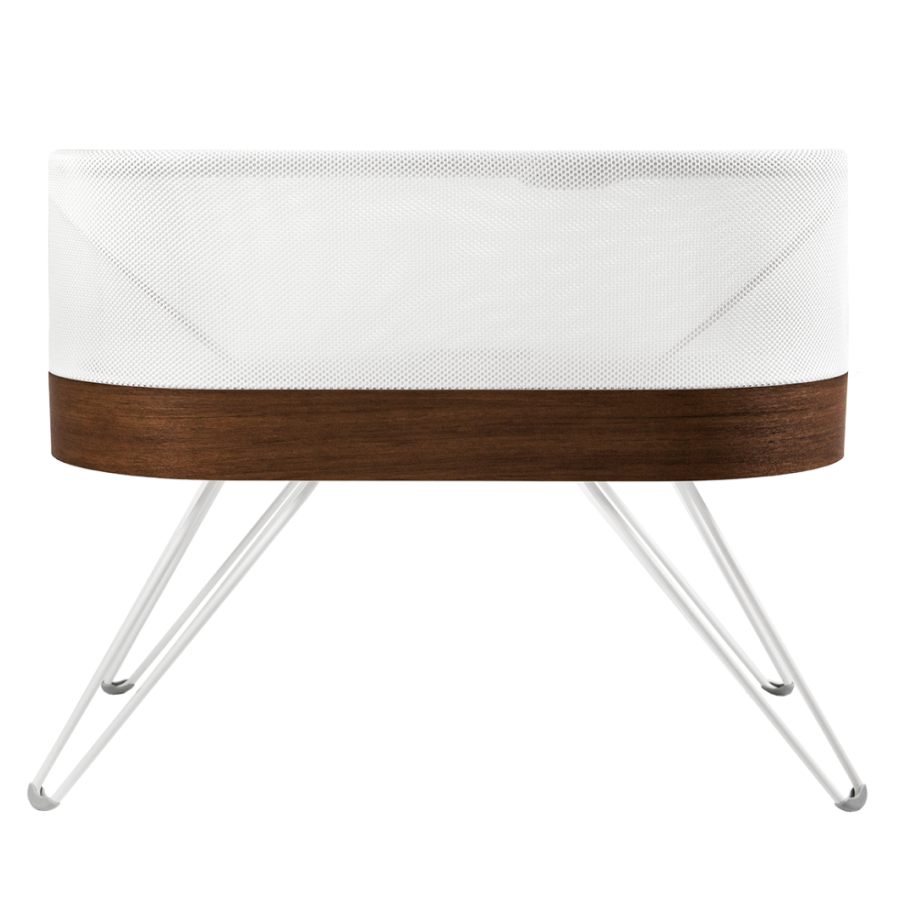
The best way to help newborns adjust to their new sleep environment is to remind them of the one they just came from…the womb! You can do that with a combo of white noise and swaddling. These sleep cues work together to ignite Baby’s innate calming reflex, which is nature’s 'off-switch' for crying and 'on-switch' for sleep. This reflex comes in handy when your little one rouses a bit when passing through a sleep cycle. If your baby is not ready for a feed and is not wailing, swaddling and white noise can work wonders to settle your bub back to sleep. And, if you are using SNOO Smart Sleeper—congrats!—the trifecta of soothing (swaddling, white noise, and rocking) will work even harder to get your precious bundle to glide back to dreamland. (Between 6 and 8 weeks is the perfect time to start a regular bedtime routine.
Baby Sleep Cycle
Once your baby reaches 3 to 4 months old, those two sleep stages morph into four…which is how many sleep stages grownups have. At the same time, your baby has finally sorted out their days and nights. Here is how your sweet pea rolls through their sleep cycle nightly:
- Stage 1 Baby Sleep: Your dozing baby may open and close their eyes while slowly drifting off. You may recognise this as the doze-while-nursing sleep stage.
- Stage 2 Baby Sleep: Here, your baby jerks and moves and may startle from a wayward sound. During this light sleep stage, your small bub can be more easily disturbed.
- Stage 3 Baby Sleep: This is deep sleep where little ones rest quietly without moving around.
- Stage 4 Baby Sleep: This is REM sleep—and it is an even deeper sleep!
While adults cycle through these stages again and again in the same order, your baby’s full sleep cycle goes from 1 to 4…then back to 3, then 2…then to 4. The coolest thing about baby sleep cycles? Forty to 50% of baby’s sleep time is in dream/memory-boosting REM (versus about 15% in adults). This is so babies have ample time to sift through all the day’s happenings to figure out which new memories to file…and which to forget.
Babies’ Daytime Sleep Schedule
Good morning! Between 2 and 8 weeks old, most little ones wake between 6 and 8am. When babies first emerge from newbornhood (between 2 and 4 months), they settle into two to three naps a day that total 4 to 8 hours of sleep. Between 4 and 8 months, naps grow a bit shorter, shaking out to 3 to 5 hours a day.
Babies’ Evening Sleep Schedule
Between 2 and 4 months old, your little one will likely be ready for bed around 9pm. They will also sleep a bit longer, too…but still expect night-waking for a feed or two. The longest stretch of unbroken sleep for these littles: Around 5 to 8 hours. By 4 to 8 months, bedtime can fall anywhere between 7pm and 9pm…and your baby may be able to snooze without interruptions for 6 to 10 hours, which most anyone would call 'sleeping through the night!'
Helping Babies Adjust to Their Sleep Cycle
Even though your newborn’s calming reflex fades about four months after birth, older babies continue to respond to the sleep-inducing lull of white noise and rocking. (Normally, swaddling needs to stop after babies begin to roll, but if you are using SNOO, your baby can stay safely swaddled for up to 6 months.)
By now, the sound of white noise and the sensation of rocking have become ingrained sleep cues. Chalk it up to what is called 'learned expectation,' which means your baby now assumes they will get sleepy when rocked or listening to white noise, and thus they do! At the same time, white noise can help guide your bub back to sleep when they wake in the middle of the night.
Around 3 to 4 months old, your baby begins to morph into a social butterfly…so they fall into light sleep and wake up…bored! They want action! Good thing white noise (and rocking with SNOO) can easily scratch that 'it is too boring' itch, helping them settle back to sleep. (Learn more about the 3- to 4-month sleep regression.)
Older Baby Sleep Cycle
Your 8- to 12-month-old is likely sleeping 12 to 14 hours a day and continues to roll through the four sleep stages…but is better able to snooze between the transitions. Your sweet baby’s sleep cycles will gradually grow from 45 to 50 minutes to 90 minutes by the time they are around 5 years old.
Older Babies’ Daytime Sleep Schedule
A older baby’s day typically starts between 6 to 7am, but they are still squeezing two to three naps into their daily routine that generally last an hour or two, max. But be warned: Some kids are cat-nappers who pop back up to play after a mere 30 minutes of sleep.
Older Babies’ Evening Sleep Schedule
Nighttime sleep begins around 7 to 9pm now, and your little one’s longest stretch of sleep is likely 7 to 10 hours at night!
Helping Older Babies Adjust to Their Sleep Cycle
When your baby is 8 to 10 months old, they may suddenly start to wake up once, twice…even three times a night! (This is known as the 8- or 9-month sleep regression), and it usually goes hand-in-hand with big developmental or physical changes—like teething or learning to crawl, walk, and explore. Again, using high-quality rumbly white noise for all nights and naps helps.
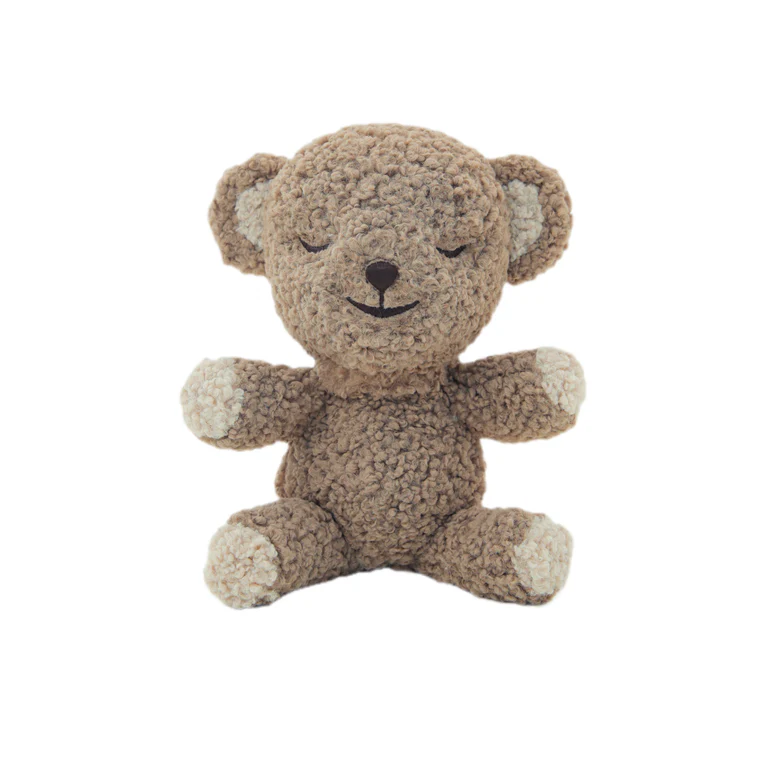
Try attaching the responsive SNOObear white noise machine to Baby’s cot, it will turn on when your little one fusses. Once your baby is a year old, you can move SNOObear into the cot so it can be your bub’s responsive white noise machine and lovey. A lovey, also called a comfort object or transitional object, is any object that your baby bonds with to feel comforted and secure. (Bedtime separation anxiety is developmentally normal during this time in your baby’s life, and a lovey can be a great balm for this issue.)
For more help getting your baby or toddler to sleep, check out Dr. Harvey Karp’s best-selling books, The Happiest Baby on the Block, The Happiest Toddler on the Block, and The Happiest Baby Guide to Great Sleep.
Disclaimer: The information on our site is NOT medical advice for any specific person or condition. It is only meant as general information. If you have any medical questions and concerns about your child or yourself, please contact your health provider. Breastmilk is the best source of nutrition for babies. It is important that, in preparation for and during breastfeeding, mothers eat a healthy, balanced diet. Combined breast- and bottle-feeding in the first weeks of life may reduce the supply of a mother's breastmilk and reversing the decision not to breastfeed is difficult. If you do decide to use infant formula, you should follow instructions carefully.






SHARE THIS ARTICLE
PARENT PICKS
Bestsellers