TODDLER
When Is My Child Too Sick for Nursery or School?
Your little one woke up under the weather—should they stay home? Here’s how to make that call.
Written by
Happiest Baby Staff
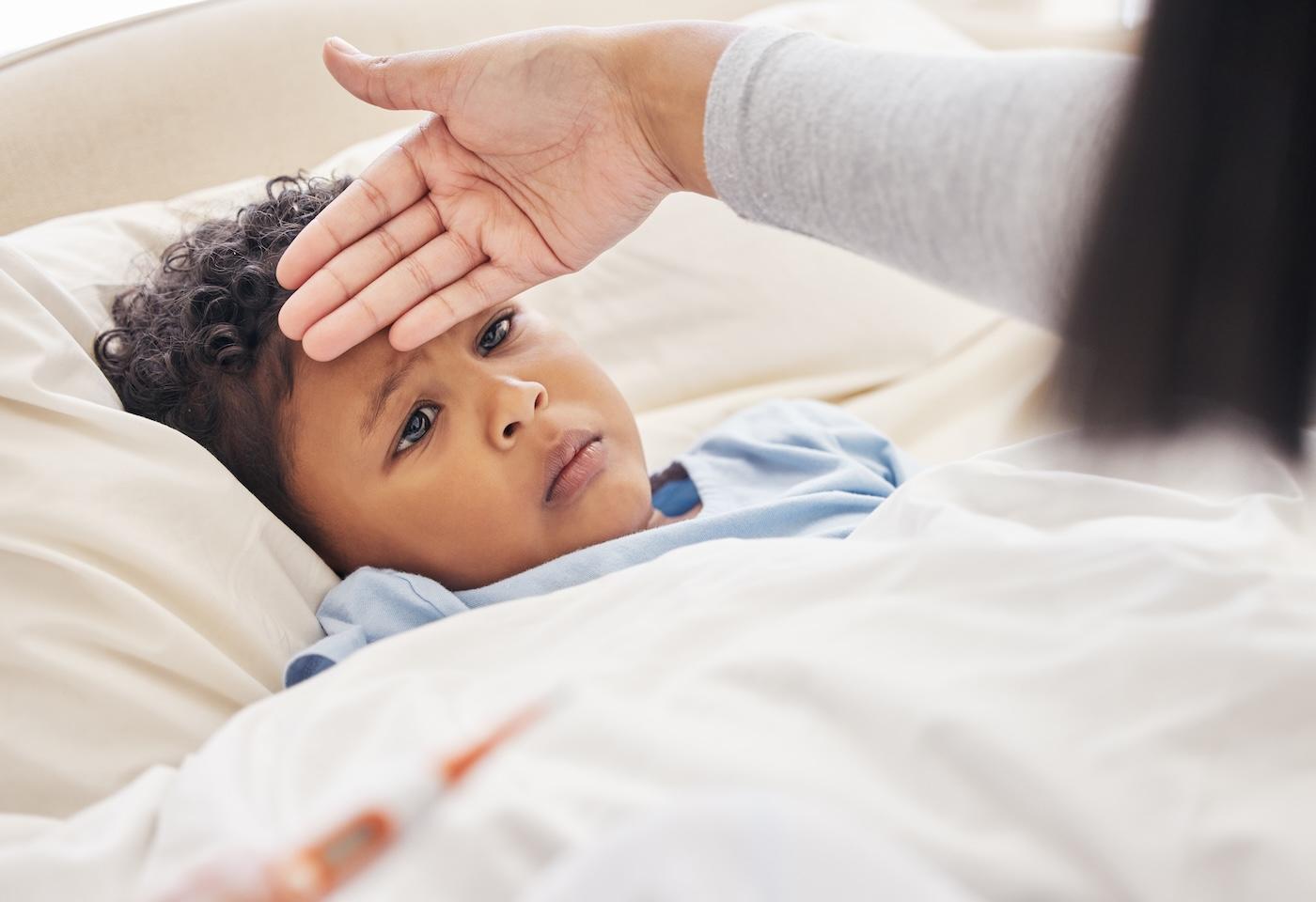
Every parent has faced some version of this early-morning wrench-in-your-plans: Your little one woke up sniffly, a bit warm, or just off. Nursery drop-off is in 45 minutes. Do you ring in to work and keep them home—or cross your fingers and go? After all, you’ve got a packed day, and it could totally be nothing!
It's one of those judgment calls that can feel impossibly hard, but there are clear guidelines. The American Academy of Pediatrics (AAP) and the Centers for Disease Control and Prevention (CDC) both offer evidence-based guidance on when children should stay home from childcare or school. Understanding them can take a lot of guesswork out of the equation—and help protect both your child and their classmates. Here’s what the experts say to watch for.
The Big-Picture Rule
Before diving into specific symptoms, there's one question to keep front of mind: Is your child well enough to participate comfortably in their day? The AAP advises sending children only when their symptoms won’t prevent them from engaging in activities, won’t require more care than staff can safely provide, and don’t pose a meaningful risk of spreading illness to others. With that framework in place, here are the specific signs that mean it’s a stay-home day.
Fever
This is the clearest signal your child’s body is fighting something. Any temperature above 38.3°C combined with a change in behaviour or other symptoms—like a sore throat, rash, vomiting, or diarrhoea—is grounds for keeping your child home from childcare. Kids should stay home until they have been fever-free for at least 24 hours without the help of fever-reducing medication like paracetamol or ibuprofen. Masking a fever with medicine and sending a child to nursery still puts classmates and caregivers at risk.
A special note for infants under 2 months: Any fever of 38°C or higher in a very young baby is a medical emergency—call your GP or paediatrician immediately and skip childcare entirely. (For a deeper dive on fevers in babies, check out Happiest Baby's guide to baby fevers.)
Vomiting
Throwing up—especially more than once—is a clear sign your child needs to be home. The CDC guidelines flag vomiting more than twice in the preceding 24 hours as a reason to stay home. The AAP's childcare guidance echoes this as well.
Beyond the obvious discomfort factor, vomiting illnesses are highly contagious and can spread rapidly through a childcare setting. Your child also needs to be able to hold down fluids before they're ready to head back. The CDC advises that vomiting should resolve overnight, with the child able to keep down food and liquids in the morning, before returning to school.
Diarrhoea
Loose, frequent stools are another clear stay-home signal. Little ones should be kept home from childcare if they are having more than two stools above their normal in a 24-hour period, or if their stools contain blood or mucus. For tots in nappies, keep them home if the stool can’t be contained. For toilet-trained children, stay home if accidents are happening.
Diarrhoea can be caused by bacterial infections that are quite contagious—and some strains, like Shiga toxin-producing E. coli, require specific guidance from your local public health authority before a child can return. If there’s blood in the stool, check in with your healthcare provider before sending your child back.
The CDC says a child can return when diarrhea has improved and they are no longer having accidents, or are having no more than two bowel movements above their normal per day.
Worsening Respiratory Symptoms
Here's where things get a bit tricky. The AAP is pretty clear that a runny nose on its own—even a colorful one—is generally not a reason to exclude a child from childcare. Coughs and colds are so common in young children (most little ones get six to eight colds a year!) that excluding every child with a sniffle would be impractical and not meaningfully protective.
That said, the CDC does flag respiratory symptoms that are worsening or not improving—and that aren't better explained by something like seasonal allergies—as a reason to stay home. A persistent, hacking cough that disrupts an entire classroom, labored breathing, or symptoms getting worse day by day all warrant keeping your child home and calling their healthcare provider. Children can return once respiratory symptoms are overall improving for at least 24 hours.
Strep Throat
Strep throat is one illness where getting a diagnosis really matters. Unlike a garden-variety viral sore throat, strep is caused by group A Streptococcus bacteria and is highly contagious through respiratory droplets and close contact.
If your child tests positive for strep, the AAP advises keeping them home until they have been on the appropriate antibiotic for at least 12 hours and are fever-free. The CDC similarly recommends staying home until the child no longer has a fever and has been on antibiotics for at least 12 to 24 hours—check with your healthcare provider for their guidance.
So, don’t skip the GP visit for a sore throat that seems worse than a typical cold, especially if your child has no runny nose or cough (classic signs that point to a virus rather than strep).
A New or Unexplained Rash
A rash that shows up out of nowhere—particularly one accompanied by a fever—deserves medical attention before your child returns to nursery. Many childhood rashes are harmless, but some—like roseola, scarlet fever, chickenpox, or hand-foot-and-mouth disease—are contagious and require exclusion. Per the AAP’s childcare guidance, a rash without fever or behavioural changes doesn’t automatically require exclusion—but if you’re unsure what you’re looking at, it’s always better to check with your healthcare provider first.
One rash that is always a medical emergency: a rapidly spreading, non-blanching rash that looks like small red or purple dots or bruising. Call 999 immediately—this can be the sign of a serious infection, bleeding under the skin, or blood disorder.
Draining Skin Sores
Sorry in advance for the mental images this is about to conjure, but open sores that are actively leaking fluid—and that can't be fully covered with a bandage—should keep your child home. These sores can indicate infections like impetigo (caused by group A strep or staph), which are contagious through skin-to-skin contact. Once the sores are crusting over and your child is under treatment from their provider, the CDC says they can generally return to school.
Pink Eye (Conjunctivitis)
Parents often expect pink eye to automatically mean a day home—but the answer is more nuanced. Most cases of pink eye in young children are viral in origin, similar to a common cold, and often resolve without treatment. The AAP notes that yellow, green, white, or watery eye discharge—even with red whites of the eyes—does not automatically require childcare exclusion, as long as the child has no fever and is acting normally.
That said, many childcare programs have their own policies. As the AAP explains, schools often require 24 hours of antibiotic eye drops before a return—so it’s worth checking your setting’s policy and calling your GP or paediatrician if symptoms seem severe or bacterial in nature (think thick discharge, a lot of crusting, or an eye that’s swollen shut).
When Your Child Just Feels Lousy
Sometimes there’s no single symptom that checks a box—your child is just plain miserable. Maybe they’re unusually lethargic, refusing to eat, clinging to you, or tearful in a way that goes beyond their typical temperament. If you think your child’s needs would interfere with their caregivers’ ability to look after other children, they should stay home. Trust your instincts here. You know your child’s baseline better than anyone, and a day of rest at home often speeds recovery.
When to Call Your Healthcare Provider
Some symptoms always warrant a call to your child’s GP or paediatrician—regardless of whether childcare is in the picture:
- Fever in a baby under 3 months old
- Any fever above 40°C in a child of any age
- Difficulty breathing or rapid, labored breathing
- Extreme lethargy or difficulty waking
- Signs of dehydration (no wet nappies, dry mouth, no tears when crying)
- Symptoms that seem to be getting worse rapidly
The Bottom Line
The decision to keep your child home from nursery or school doesn’t have to be a gut-wrenching guessing game every time. When in doubt, let this simple framework guide you: Fever, vomiting, and diarrhoea are almost always stay-home symptoms. Worsening respiratory illness, unexplained rashes, diagnosed strep, and open draining sores are too. A mild runny nose or cough without fever? Usually fine to go—especially once symptoms are improving. And when you’re still not sure, your child’s GP or paediatrician can help you make the final call.
***REFERENCESAmerican Academy of Pediatrics: When to Keep Your Child Home From Child CareCenters for Disease Control and Prevention: When Students or Staff are SickAmerican Academy of Pediatrics: When to keep Your Child Home Sick From SchoolAmerican Academy of Pediatrics: Group A Streptococcal (Group A Strep) InfectionsCenters for Disease Control and Prevention: Testing for Strep Throat or Scarlet FeverNational Library of Medicine: PetechiaeAmerican Academy of Pediatrics: Do I Need to Keep My Son Home If He Has Pinkeye?Disclaimer: The information on our site is NOT medical advice for any specific person or condition. It is only meant as general information. If you have any medical questions and concerns about your child or yourself, please contact your health provider. Breastmilk is the best source of nutrition for babies. It is important that, in preparation for and during breastfeeding, mothers eat a healthy, balanced diet. Combined breast- and bottle-feeding in the first weeks of life may reduce the supply of a mother's breastmilk and reversing the decision not to breastfeed is difficult. If you do decide to use infant formula, you should follow instructions carefully.






SHARE THIS ARTICLE
PARENT PICKS
Bestsellers